OpenAI in 2026: How Cutting-Edge AI Is Powering the Next Era of Automation
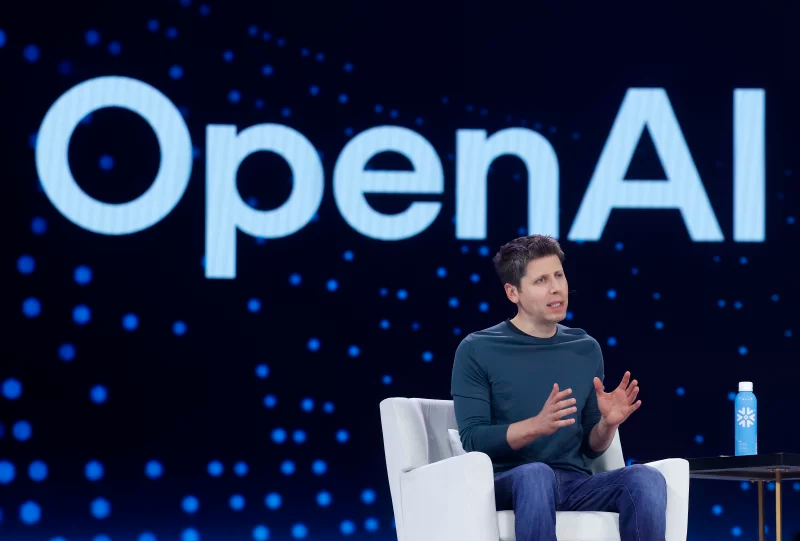
OpenAI Research & the Future of Intelligent Automation
Artificial Intelligence has crossed a critical threshold. What was once viewed as an experimental or optional technology has now become a foundational layer of modern business automation. From customer support and marketing to analytics, operations, and decision-making, AI is increasingly responsible for how work gets done at scale.
At the center of this transformation is OpenAI — a research-driven organization shaping the evolution of intelligent systems that can reason, analyze, and act autonomously. OpenAI’s advancements are not simply improving software features; they are redefining how businesses structure workflows and deploy intelligence across their operations.
At Automate For Me, we actively study OpenAI’s research, model updates, and long-term roadmap to translate cutting-edge AI into practical, scalable automation systems. This article explores where OpenAI stands today and what its progress means for organizations adopting intelligent automation.
What Is OpenAI and Why It Matters for Automation
OpenAI is an artificial intelligence research and deployment company focused on building highly capable, safe, and aligned AI systems. Unlike traditional software that follows rigid rules, OpenAI models understand language, context, and intent — allowing them to reason through complex problems.
For automation, this distinction is critical. Traditional automation relies on predefined logic. AI-powered automation, by contrast, adapts dynamically to changing inputs, edge cases, and evolving business needs.
OpenAI enables automation platforms and AI agencies like Automate For Me to build systems that can:
- Interpret unstructured data such as text, emails, and documents
- Make contextual decisions instead of following static rules
- Integrate seamlessly with CRMs, databases, APIs, and workflow tools
- Scale intelligence across departments without increasing headcount
In short, OpenAI is the intelligence engine behind modern automation — enabling systems that think, adapt, and improve over time.
Latest OpenAI Model Advancements (2025–2026)
GPT-5.2: A New Standard for Business AI
The release of GPT-5.2 marked a significant milestone in the evolution of AI models. Unlike earlier generations that focused primarily on content generation, GPT-5.2 emphasizes reasoning accuracy, operational reliability, and performance consistency — all essential qualities for enterprise automation.
Key improvements include:
- Stronger logical reasoning for multi-step workflows
- Reduced hallucinations in structured tasks
- Improved long-context understanding for reports and audits
- Lower latency and optimized cost efficiency
For businesses, this translates into AI systems that can be trusted with decision-support, operational automation, and mission-critical workflows.
Reasoning-First AI Models
One of the most important shifts in OpenAI’s research is the move toward reasoning-first models. These models break problems into logical steps, evaluate conditions, and generate structured outputs rather than producing surface-level responses.
This capability is foundational for:
- Workflow automation with branching logic
- Financial modeling and forecasting
- Legal and compliance analysis
- Complex decision trees across multiple systems
At Automate For Me, reasoning-first AI enables us to deploy AI agents that behave like analysts, not chatbots.
Deep Research: AI as a Digital Analyst
OpenAI’s Deep Research capabilities represent a major leap forward in how AI handles information. These models can ingest large volumes of data, identify patterns, synthesize insights, and generate structured research outputs.
This transforms AI from a reactive assistant into a proactive digital analyst capable of:
- Automated market research
- Competitor intelligence analysis
- Strategic planning support
- Internal knowledge base creation
For organizations dealing with information overload, Deep Research allows faster, more informed decision-making without manual data synthesis.
AI Safety, Alignment, and Enterprise Trust
As AI systems become more autonomous, trust becomes a non-negotiable requirement. OpenAI has significantly expanded its focus on safety, alignment, and reliability — especially for business and enterprise use cases.
Key areas of focus include:
- Reducing hallucinations in reasoning-heavy workflows
- Detecting deceptive or misleading outputs
- Ensuring alignment with human intent and business rules
- Improving auditability and predictability
For automation agencies like Automate For Me, these advancements enable the deployment of AI systems that are not only powerful, but dependable and controllable.
The Rise of Autonomous AI Agents
The future of automation lies in autonomous AI agents — systems capable of planning, executing, monitoring, and optimizing workflows without constant human intervention.
OpenAI’s roadmap clearly points toward agents that can:
- Plan multi-step tasks
- Execute actions across platforms and tools
- Evaluate outcomes and self-correct
- Escalate to humans only when required
At Automate For Me, we already deploy AI agents powered by OpenAI to manage CRM updates, generate reports, handle customer interactions, and orchestrate workflows across systems.
What This Means for Businesses Today
OpenAI’s advancements send a clear message: businesses that embrace AI-driven automation now will outperform those that delay adoption.
Key benefits include:
- Reduced operational costs
- Faster and more accurate decision-making
- Scalable customer engagement
- 24/7 intelligent execution
AI automation is no longer about experimentation — it is about competitive survival.
How Automate For Me Uses OpenAI
At Automate For Me, OpenAI models form the intelligence layer behind custom-built automation systems tailored to each client’s workflows, tools, and growth objectives.
Our solutions are:
- Custom-designed for your business
- Integrated with your existing tech stack
- Secure, scalable, and future-ready
- Focused on measurable ROI
Final Thoughts
OpenAI’s research confirms one truth: intelligent automation is no longer optional. As AI continues to evolve toward reasoning, autonomy, and continuous execution, businesses that act now will define the future of their industries. With OpenAI’s innovation and Automate For Me’s implementation expertise, that future is already within reach.
AI Automation vs Traditional Automation
Traditional automation has existed for decades. Rule-based workflows, triggers, and conditional logic helped businesses reduce manual effort, but they also introduced rigid systems that struggle with change. These systems depend heavily on predefined inputs and break easily when faced with unexpected scenarios.
AI-powered automation represents a fundamental shift. Instead of executing fixed rules, AI systems interpret intent, evaluate context, and adapt their actions accordingly. This makes automation resilient, scalable, and significantly more intelligent.
The key differences include:
- Traditional automation reacts to rules, AI automation understands goals
- Rule-based systems fail on edge cases, AI adapts dynamically
- Traditional workflows require constant maintenance, AI systems self-improve
- AI automation scales intelligence, not just execution
At Automate For Me, we combine traditional automation reliability with OpenAI-powered intelligence, creating hybrid systems that are both stable and adaptive.
Real-World AI Automation Use Cases
OpenAI-powered automation is already transforming how businesses operate across industries. These are not experimental ideas — they are active, revenue-impacting systems in production environments.
Marketing & Growth Teams
AI automates content creation, campaign optimization, audience segmentation, and performance analysis. Instead of manually writing copy or analyzing reports, teams focus on strategy while AI handles execution.
Sales & CRM Operations
AI agents qualify leads, update CRM records, generate follow-ups, and identify deal risks. Sales teams gain real-time insights without spending hours on data entry or reporting.
Customer Support
AI chatbots powered by OpenAI handle customer queries, resolve issues, escalate complex cases, and continuously learn from interactions. This ensures consistent support without increasing staffing costs.
Operations & Internal Workflows
From document processing to internal approvals and reporting, AI automation eliminates bottlenecks and improves execution speed across departments.
AI Agents as Digital Employees
One of the most powerful concepts enabled by OpenAI is the idea of AI agents as digital employees. These agents are not single-purpose bots — they are systems capable of understanding objectives, managing tasks, and executing workflows independently.
AI agents can:
- Monitor systems and trigger workflows automatically
- Communicate across tools like CRMs, databases, and APIs
- Generate reports and insights without prompts
- Operate continuously without fatigue or downtime
At Automate For Me, AI agents are designed with clear boundaries, audit logs, and escalation rules — ensuring control while maximizing autonomy.
Data Privacy, Security, and Compliance
For businesses adopting AI automation, data security is a top concern. OpenAI’s enterprise-grade infrastructure and security practices enable responsible AI deployment when combined with proper system architecture.
At Automate For Me, security is embedded into every automation system:
- Strict access control and role-based permissions
- Encrypted data flows across all integrations
- Compliance-aware system design
- Clear AI usage boundaries and monitoring
This ensures businesses gain AI efficiency without compromising trust, compliance, or operational integrity.
Why AI Automation Is a Long-Term Investment
AI automation is not a short-term productivity hack — it is a long-term strategic investment. As AI models improve, systems built today become more valuable over time rather than obsolete.
Businesses that adopt AI automation early benefit from:
- Compounding efficiency gains
- Institutional knowledge captured in AI systems
- Lower marginal costs as operations scale
- Increased agility in competitive markets
With OpenAI’s continuous advancements, AI automation systems evolve alongside the business — not against it.